Sole Searching: Why Your Trainers Tell Every British Person on the Bus Exactly Who You Are
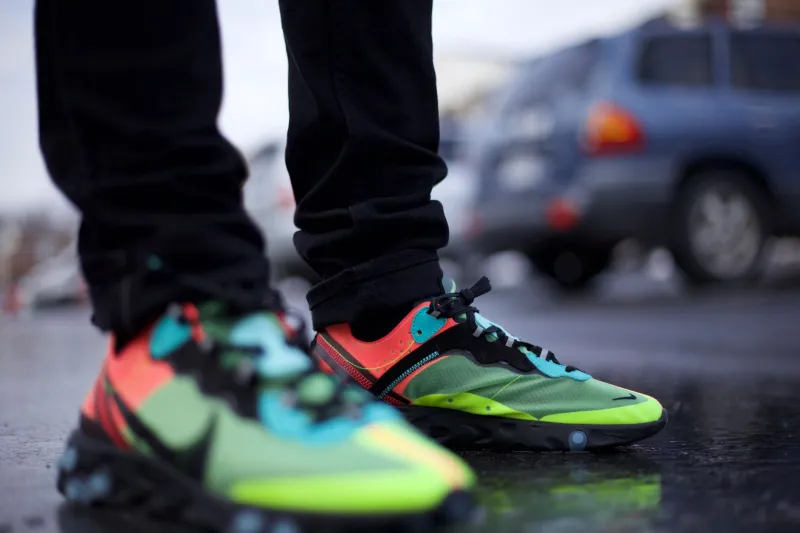
There are very few decisions a British person makes that carry quite so much invisible weight as the choice of what to put on their feet before leaving the house. You'd think it would be simple. Feet. Floor. Shoes. Job done. But no. Somehow, over the course of several generations, the British public has developed an elaborate, largely unspoken, occasionally vicious system of footwear judgement that would make a panel of Milan fashion critics look relaxed by comparison.
Wear the wrong trainers to a family barbecue and you'll catch your auntie's eyes flicking downward for just a fraction of a second too long. Say nothing. She'll say nothing. But something has been communicated, and everyone in the garden felt it.
It's Not Snobbery. It's Just... Standards.
The first thing a British person will tell you when accused of being a footwear snob is that they're not a footwear snob. They just have opinions. There's a difference, apparently.
These opinions tend to arrive fully formed and deeply held, passed down like a family heirloom nobody technically asked for. There's the dad who insists that trainers should never, under any circumstances, be worn to a restaurant. Not a fancy restaurant — any restaurant. There's the nan who doesn't trust a man in white trainers. There's the older brother who spent three months' wages on a pair of limited-edition Samba collabs and will absolutely bring them up if you ask him how he's doing.
And then there's the bloke at work who wears New Balance 574s every single day with chinos and a fleece, and somehow commands more quiet respect than anyone in the office. Nobody knows why. Nobody questions it.
Class, Comfort, and the Marks & Spencer Middle Ground
Footwear in Britain has always been tangled up with class in a way that's become increasingly complicated now that a pair of Adidas Gazelles can cost you £95 and a pair of brogues from a charity shop costs £4.50.
For a long time, the rule was fairly legible: proper shoes meant you were serious, trainers meant you were casual, and casual had a slightly suspicious quality to it — like you weren't quite trying hard enough. But that hierarchy has collapsed in on itself spectacularly. Trainers are now luxury items. Designer brands that used to signal working-class cool have been absorbed into the wardrobes of people who summer as a verb. And meanwhile, the original gatekeepers of footwear respectability — your brogues, your loafers, your sensible lace-ups — have been adopted wholesale by the kind of twenty-four-year-old who listens to Fontaines D.C. and drinks natural wine.
The result is total chaos. Nobody knows what anyone's shoes mean anymore, so everyone's just making increasingly confident guesses.
Regional Dispatches From the Shoe Wars
It's worth noting that footwear snobbery in Britain is not uniformly distributed. Geography plays a significant role.
In certain parts of Manchester and Liverpool, the trainer is practically a civic institution. Wearing a particularly clean pair of Reeboks or Nikes to the match isn't just acceptable — it's expected. There's a whole aesthetic language being spoken through sole thickness and colourway that outsiders simply cannot read. Turn up in scuffed shoes and you've made a statement you didn't intend to make.
In rural parts of the Home Counties, meanwhile, the Hunter welly remains a sort of social passport. You don't have to be going anywhere muddy. The point is that you could be. You are the kind of person for whom mud is a theoretical possibility, and that matters.
London, as ever, is doing seven contradictory things at once. East London is in a post-ironic Skechers moment that nobody fully understands. South London is devoted to Jordans with a commitment that borders on religious. North London is wearing something Italian that you've never heard of and doesn't have a logo, which is somehow the loudest logo of all.
The Unwritten Rules (That Everyone Somehow Knows)
Despite no official documentation existing anywhere, most British people have absorbed a fairly detailed internal rulebook about footwear appropriateness. A few highlights:
- Wearing trainers to a wedding is acceptable now, but only if they're clean trainers. Scuffed trainers at a wedding is a personality disorder.
- Crocs are simultaneously the most hated and most quietly owned shoe in the country. Half the people mocking them own a pair for the garden.
- Flip flops in a British city centre in March — specifically March, when it's still technically cold — signal a particular kind of indestructible optimism that is both admirable and baffling.
- Ugg boots have been cancelled and reinstated approximately four times since 2003 and will outlive us all.
- If a man over fifty is wearing very white, very fresh trainers, he either just bought them or he's going through something. Both deserve respect.
What Your Shoes Say Without You Saying Anything
The deeper truth here — and there is one, buried under all the snark — is that shoes are one of the last genuinely legible signals in an era where fashion has become deliberately illegible. When everyone's wearing oversized everything in beige, the shoes are often the only thing that still communicates something specific.
They tell you about effort: did this person think about this, or did they grab the nearest thing by the door? They tell you about money — or rather, about what someone's chosen to spend money on, which is different. They tell you about allegiance: to a subculture, a region, a generation, a vibe.
British people are extraordinarily good at reading these signals and extraordinarily bad at admitting they're reading them. Ask someone why they clocked a person's shoes and they'll shrug. They weren't looking. They're not like that.
But they were. They absolutely were.
The Bottom Line (Literally)
At the end of the day, Britain's obsession with what other people put on their feet is really just Britain's obsession with other people, expressed through a slightly more socially acceptable medium than staring directly at their face and making a judgement.
We are a nation that cares enormously about appearances while insisting we don't care at all. Shoes are the perfect vehicle for this contradiction. You can clock someone's trainers, form a complete opinion about their character, and then look away — and nobody can prove a thing.
Very British. Very tidy. Nicely done.