Just One More Side: The Magnificent Madness of Ordering a British Takeaway
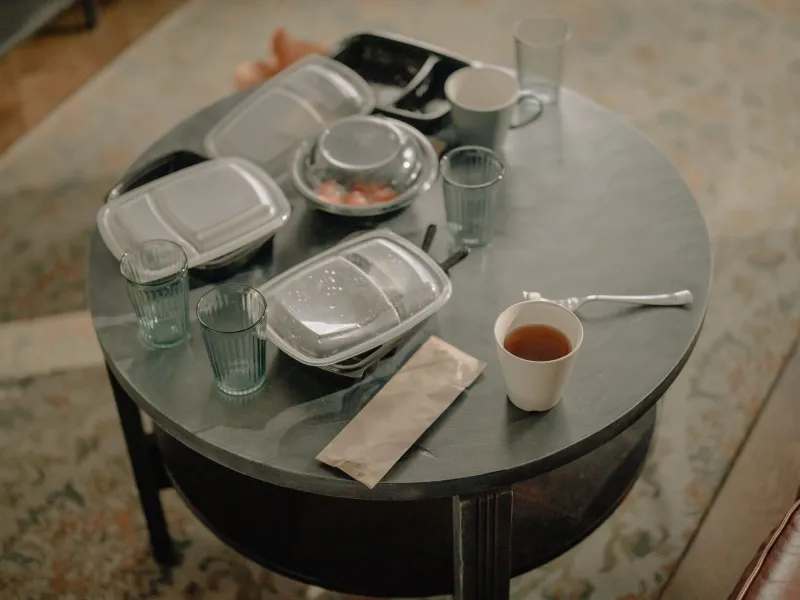
It starts so innocently. You're tired, you can't be bothered cooking, and you deserve a treat. One dish. Maybe some rice. Done. Simple. Civilised, even.
Except it never, ever ends there.
Somewhere between opening the app and hitting 'Place Order', a quiet but devastatingly persuasive voice in the back of your head starts whispering. What if the portion's small? What if you're still hungry? What if you get the poppadoms and then regret not getting the onion bhajis as well? And just like that, you're adding a starter you didn't need, a side dish you'll definitely leave, and a second sauce 'just in case'.
Welcome to the Great British Takeaway Spiral. Population: all of us.
The Anxiety of Appearing Stingy
Here's the thing nobody admits out loud: a huge part of the overordering instinct has absolutely nothing to do with hunger. It's about optics. Specifically, the deeply irrational fear that someone — a delivery driver, a restaurant kitchen worker, possibly the ghost of your nan — will look at your modest single-person order and quietly judge you for it.
A main course and some rice? That's barely an order. That's a cry for help dressed up as a meal. You need to bulk it out. Add a side. Add two sides. Throw in some garlic bread even though you're getting a Thai green curry, because the heart wants what it wants and the heart apparently wants to look generous.
There's a uniquely British logic at work here, one that sits somewhere between social anxiety and performative abundance. We are a nation that will stand in a supermarket agonising over whether to buy the own-brand baked beans or splash out on Heinz, yet we will cheerfully spend an extra twelve quid on takeaway extras we don't need because it feels more acceptable somehow. The maths doesn't work. The psychology, unfortunately, makes complete sense.
The Delivery Driver Dimension
And then there's the driver.
Rationally, you know the delivery driver does not care what you've ordered. They are a professional. They have seventeen other stops to make tonight and zero interest in the contents of your brown paper bag. And yet.
Something about handing over a single, lonely container feels like a confession. A confession that you are eating alone, that you ordered for one, that you are a solitary creature sitting in your flat watching a documentary about bridges at nine o'clock on a Wednesday. The extra containers provide cover. They suggest company. They imply that somewhere in your home there are other human beings who also need feeding, rather than just you and a cat who's judging you from the radiator shelf.
This is, when you say it out loud, completely unhinged. But if you've ever added a portion of chips purely so the bag looked fuller, you already know exactly what we're talking about.
The Leftover Mythology
Of course, the British overorderer always has a fallback position, and it is this: leftovers.
Leftovers are the great justification. The philosophical safety net. You're not being excessive — you're being efficient. You're meal prepping, essentially. Tomorrow's lunch is sorted. Maybe even tomorrow's dinner. You have, against all odds, stumbled into a form of domestic competence entirely by accident.
Except the leftovers almost never get eaten. They go into the fridge in their little foil containers, stacked with the best of intentions, and then they sit there for three days while you eat cereal and convince yourself you'll have the curry 'tomorrow, definitely'. By day four, there's a silent negotiation happening between you and the fridge. By day five, you throw the whole lot away with a vague sense of shame and a firm resolution to order sensibly next time.
You will not order sensibly next time.
The App Made It Worse (Obviously)
It would be remiss not to acknowledge the role that delivery apps have played in accelerating all of this. Before the apps, you rang the restaurant, you said what you wanted, you paid, you waited. There was friction. Friction is good. Friction stops you from adding a second dessert 'just to try it'.
Now you have infinite browsing time, a recommended items carousel specifically designed to make you feel like you're missing out, and a minimum order threshold that somehow always sits just above what you actually want to spend. The app is not your friend. The app is an extremely sophisticated engine for convincing you that the loaded fries are a reasonable addition to an already complete meal.
And the photos. Good grief, the photos. Every dish photographed in golden light like it's auditioning for a lifestyle magazine. You came for a korma. You're leaving with a korma, two starters, a side of saag aloo, and a mango lassi you'll drink one sip of and forget about.
Eating It Hot Is for Other Countries
Perhaps the most quintessentially British aspect of the whole ritual is the relationship with temperature. Takeaway food is, by its very nature, designed to be eaten hot. It travels to your door in insulated bags specifically to preserve that heat. The window of optimal consumption is perhaps fifteen minutes, twenty if you're lucky.
British people will spend that window doing almost anything other than eating. Sorting out plates. Rearranging the containers. Debating who gets which bit. Waiting for someone to finish in the bathroom. Sitting down, getting up again to get a drink, sitting down, realising you forgot cutlery, getting up again. By the time the meal is actually underway, it has cooled to a temperature that could generously be described as 'ambient'.
And nobody says anything. Because saying 'the food's gone cold' would mean acknowledging that you all collectively failed to eat it while it was hot, which is somehow embarrassing, and we are British, and we do not do embarrassing.
The Real Reason We Do It
Strip away the psychology, the app mechanics, and the leftover mythology, and there's something almost endearing at the heart of the British takeaway overorder. It's optimism. It's the belief, renewed every single time, that this occasion deserves a bit of extra. That you're worth a second side dish. That tonight can be a proper spread rather than just a meal.
There's something very human about that, even if the execution does result in forty quid spent, a fridge full of foil containers, and the creeping realisation that you're going to be eating cold rice for breakfast.
Go on then. Add the naan. You've earned it.