Every Step You Take: The Suspicious Acoustic Life of the British Staircase
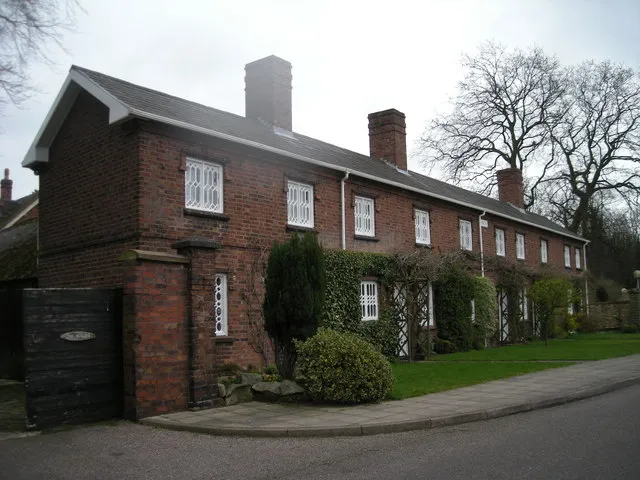
Photo: Row17, CC BY-SA 2.0, via Wikimedia Commons
You could live in your house for forty years. You could know every corner of it — every draughty window, every dodgy light switch, every cupboard door that swings open on its own like it's haunted by the ghost of a previous tenant who also couldn't afford a plumber. And yet, without fail, the staircase will betray you.
Not once. Not occasionally. Every single time.
There is something deeply, specifically British about this. Not for us the smooth, silent staircases of Scandinavian architecture or the reassuring solidity of continental stone steps. No. The British home — particularly anything built between 1930 and 1985 — seems to have been designed with one express purpose: to announce your movements to every conscious person within a thirty-metre radius, and several unconscious ones besides.
The Creak as Communication
Let's be honest about what's actually happening here. The staircase isn't just a structural inconvenience. It's a language. A full, nuanced, deeply expressive dialect that every member of a British household learns to interpret without ever once sitting down to study it.
A single slow creak at 11:47pm? That's someone trying to reach the kitchen without starting a conversation about whether they've locked the back door. A rapid succession of three creaks in the upper middle section? Child, approximately nine years old, returning from the bathroom and hoping nobody noticed they were actually just playing on their tablet. A long, drawn-out groan from the bottom step, followed by silence? That's an adult who has made a tactical error and is now frozen mid-stair, one foot raised, calculating whether forward momentum or complete stillness is the safer option.
Every creak has meaning. Every squeak is a sentence. The British staircase is, essentially, a Morse code machine that nobody installed on purpose but everyone has learned to read.
The Teenager Problem
No group has suffered more under the tyranny of the British staircase than the nation's teenagers. The midnight kitchen raid — a sacred rite of passage, a fundamental human need — is, in a British home, essentially a military operation requiring the kind of forward planning that would embarrass most NATO generals.
You learn, over time, which steps are safe. Step two: fine. Step three: avoid entirely, place weight on the left edge only. Step five: the worst one, the loudest, the one that sounds like a small tree being felled. Step seven through nine: acceptable if you keep your body weight central and pray.
The truly experienced British teenager develops what can only be described as a staircase memory map — a mental blueprint so detailed, so obsessively refined, that they could navigate it in complete darkness, half-asleep, and carrying a bowl of cereal without spilling a drop. This is not a skill taught in schools. It is earned through failure, through waking parents, through the particular horror of hearing a bedroom door open above you mid-creak and knowing, with absolute certainty, that the game is up.
Spousal Surveillance and the Architecture of Suspicion
It doesn't end at adolescence, either. The staircase continues its work well into adulthood, quietly auditing the movements of partners who thought they were being subtle.
"You were up at half two." "Was I?" "Four creaks. Middle section. You went downstairs."
This is a real conversation that has taken place in real British homes. The staircase as evidence. The creak as alibi-destroyer. Couples who have lived together for decades develop an almost forensic ability to read each other's nocturnal movements purely through acoustic data. How long were you in the bathroom? Were those descending creaks or ascending ones? Did you stop on the landing, and if so, why?
It sounds paranoid. It isn't. It's just what happens when you've lived inside an instrument.
The Socks-on-Floorboards Doctrine
The staircase problem has also, over generations, produced one of Britain's more peculiar domestic customs: the strategic deployment of socks on wooden floors. Not for warmth. Not for comfort. For silence.
Anyone who grew up in a house with wooden stairs or bare floorboards will understand the specific physics involved. Shoes: loud, announcing, out of the question. Bare feet: better, but still capable of the odd squeak on a dry board. Socks: the gold standard. Socks, particularly slightly worn ones with a bit of give in the sole, provide just enough friction reduction to take the edge off the worst offending boards.
This is why, in British households, the sight of an adult padding around in socks at an unusual hour carries a particular charge. It means something. It means someone is trying not to be heard. And everyone in the house knows it.
Why Are British Houses Like This?
The honest answer is: age and economics. A substantial proportion of the British housing stock is genuinely old — Victorian terraces, Edwardian semis, postwar builds that were never designed with longevity in mind but have somehow outlasted everyone's expectations. Timber dries. Joints loosen. The wood that once sat tight in its frame has spent decades contracting in winter and expanding in summer, and the result is a structure that has essentially developed its own voice.
There's also the small matter of maintenance. The British relationship with home upkeep is famously, almost proudly, deferred. We will repaint a skirting board before we investigate why a stair creaks. We will buy a new kettle before we call a joiner. The creak, therefore, is not fixed. It is accommodated. It is learned. It becomes, over time, part of the house's personality rather than a defect to be corrected.
The Creak You Never Fix
And here's the thing — after a while, you stop wanting to fix it.
The creak on step five becomes part of the house. It's how you know the teenager got home safely at midnight without having to lie awake listening for the front door. It's how you know your partner is up early and the kettle will be on by the time you get downstairs. It's the sound of a house that is lived in, that has absorbed decades of family life into its floorboards and is, in its own creaking, groaning way, keeping a record.
British homes are not quiet. They never were. But perhaps that's not entirely a flaw.
Perhaps the staircase isn't betraying you. Perhaps it's just telling everyone you're home.
Which, depending on the hour and who you're trying to avoid, is either deeply comforting or absolutely catastrophic.