Slaves to the Skirting Board: How British Radiators Became the Invisible Architects of Every Living Room
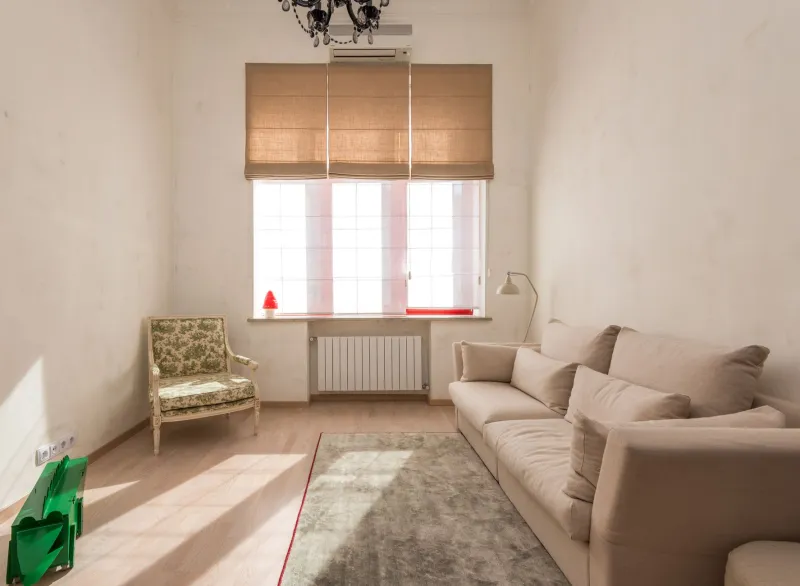
There is a moment, familiar to anyone who has ever moved into a British home, where you stand in the living room with a tape measure and the dawning realisation that none of your furniture is going to go where you want it to go. Not because the room is oddly shaped — though it probably is, because the Victorians were building for vibes, not practicality. No. It's because of the radiator.
There it sits. Squat, cream-painted, faintly gurgling. Immovable as a religious conviction. And from that moment forward, every single decision you make about how to arrange your home will orbit around it like a very cold, very British solar system.
The Radiator Is Not Furniture. The Radiator Is the Boss.
In theory, you own your living room. In practice, the radiator owns you. It determines where the sofa cannot go. It dictates which wall the telly lives on. It explains why the armchair is at that peculiar forty-five-degree angle that makes guests assume you've had a stroke while decorating.
British people do not rearrange furniture according to aesthetics, feng shui, or any interior design principle you'd find in a Sunday supplement. We rearrange furniture according to heat access, draught avoidance, and the ancient, unspoken doctrine that no object shall block the radiator. This is not a preference. This is law.
Violating it is the kind of thing that gets you talked about.
The One-Inch Shift That Broke a Household
Here's the thing about British living rooms: the margin for error is approximately zero. Move the sofa one inch to the left and you've blocked the hall draught. Move it one inch to the right and you've committed the cardinal sin of obscuring the radiator. Move it forward and someone will bark their shin on it for the rest of their natural life. Move it back and it's pressed against the wall like it's done something wrong.
And yet we keep moving things. Seasonally, sometimes. A quiet Sunday afternoon rearrangement is practically a national sport — a physical expression of the British urge to do something about a problem without actually solving it.
The negotiations involved are extraordinary. Not spoken negotiations, naturally. We're British. What actually happens is a series of micro-adjustments, each one nudging the sofa a centimetre closer to where one party wants it, until the other party nudges it back, and this continues for approximately three years until someone mentions it at Christmas and it becomes A Thing.
The Passive-Aggressive Geometry of Seating Arrangements
Every British living room contains at least one chair that nobody actually wants to sit in. It is always positioned away from the radiator. It is always offered to guests. This is not rudeness. This is hospitality with a very specific thermal hierarchy attached to it.
The seat closest to the radiator belongs to whoever has been in the house longest, whoever is coldest, or whoever got there first and claimed it with a cushion. These rules are not written down. They do not need to be. They are absorbed through years of British domestic life the same way you absorb the knowledge that you don't put the milk in first and you always knock before entering the kitchen if the door is shut.
If someone new to the household inadvertently takes the warm seat, the response will not be direct confrontation. It will be a series of pointed comments about how surprisingly warm it is today, followed by the quiet rearrangement of a throw blanket, followed eventually by a passive-aggressive cup of tea delivered to the interloper with a smile that communicates everything.
Why Suggesting Underfloor Heating Gets You Looked at Like That
At some point, someone — usually someone who has spent time abroad, or watched too many property renovation shows — will suggest that the whole radiator-furniture conflict could be resolved with underfloor heating. Or a woodburner. Or, god forbid, one of those sleek modern column radiators you can put anywhere.
The reaction to this suggestion in a traditional British household is not enthusiasm. It is a very specific kind of polite horror, the sort usually reserved for people who put pineapple on pizza or suggest shortening the queue at the post office. It's not that the idea is bad, exactly. It's that it misses the point entirely.
The radiator is not just a heating device. It is a fixed point around which an entire domestic universe has been constructed. Removing it — or worse, relocating it — would require rethinking the sofa, the armchair, the telly unit, the lamp that only reaches because the extension lead is routed behind the bookcase at that specific angle, and the small side table that exists solely because there's nowhere else for it to go. The radiator is load-bearing. Emotionally, structurally, spiritually.
The Window Problem Nobody Talks About
For reasons that have never been satisfactorily explained, British radiators are almost exclusively installed directly beneath windows. This means the warmest part of your room is also the coldest part of your room, and the furniture arrangement required to access the heat also exposes you to the draught seeping through the single glazing like a very personal insult from the 1970s.
The solution most British households arrive at is a pair of thick curtains that pool slightly on the floor, a draught excluder that looks like a sausage dog, and a blanket on the sofa that is for guests but is used by everyone every evening from October through April.
This is not a design failure. This is character.
The Furniture That Never Quite Fits
Perhaps the most endearing result of the radiator-led living room is the furniture that exists in a state of permanent compromise. The bookcase that's slightly too wide, angled out from the wall at one end to avoid the pipes. The pouffe that lives in the corner not because anyone wanted a pouffe in the corner, but because that was the only configuration in which everything else worked. The lamp on the floor because there's no table that can go there, but the room is too dark without it.
Visitors notice these things. They don't say anything, because they've got the same situation at home. We all have. Every British living room is a masterpiece of improvised engineering, a monument to the national capacity for making the best of a situation rather than actually fixing it.
And honestly? We're very attached to it. The day the radiator moves is the day everything has to change, and change, as any British person will tell you, is fine. Totally fine. Absolutely no problem at all.
But we're not moving the sofa again until spring.